Tuesday, September 18, 2012

Simple Beauty

From Pete Zarria:

Blairstown, Iowa

Blairstown, Benton County, Iowa - Pop. 685. Many people simply do not realize all the beauty that is spread across the world. Even across just a flat old farm state known for corn and hogs. This scene is just a simple grain elevator in small Iowa town backed by nature's best light.

Monday, September 10, 2012

More Backside TV

From Dave Brigham:

I spent a lot of time over the summer watching the Food Network. I can't cook much, but I love to watch other people who do it well. I got really into "Chopped," "The Great Food Truck Race" and "Diners, Drive-Ins and Dives."

But I got a bit burned out on that stuff, so I was really happy when I saw a preview for National Geographic Channel's new reality series, "Abandoned."

To date I've watched three episodes, and have a few more waiting for me on my DVR. In the show, carpenter/antique collector/restoration expert Jay Chaikin, along with his buddies Dan and Mark, get permission to enter abandoned buildings looking to salvage antiques, collectibles and furniture.

They walk very carefully through old mills, churches, breweries, factories and banks, marveling at the architecture and the relics they find. Chaikin is an amiable host, and his friend Mark provides some comic relief.

I'm not an urbex guy -- I don't think getting arrested for trespassing would go over well with my wife, and it would be hard to pick up my kids at school if I were in jail. So I live vicariously through people who are bold enough to enter dilapidated buildings to see what's been left behind, and to behold the beauty of decay.

As I said, in "Abandoned," the hosts receive permission from property owners to enter the buildings. After they pick through the stuff, they haggle with the owners over items they want to restore and resell. Yes, the show is similar to History Channel's "American Pickers," but there's nothing wrong with that.

In some cases, the buildings are facing demolition; in other situations, they don't indicate what the fates are.

So if you find yourself looking to fill an hour to learn about endangered historic sites, urban exploration and antique collecting and restoration, check it out.

I also watch Travel Channel's "Off Limits," which used to focus more on old factories and abandoned mines. This season the host, Don Wildman, has changed the focus a bit to places like operational salt mines and Air Force base rocket launches, but it's still a cool show. I wrote a bit about the show in May 2011.

Wednesday, September 5, 2012

Nice Hat

From Pete Zarria:

El Mecca Club

Actually, I was looking for a place to park to get a shot at the Veteran's Hall neon sign. I found this. Waterloo, Iowa.

Friday, August 31, 2012

I Wanna Walk

From Dave Brigham:

Every Saturday (with a few exceptions) for the last ten months, I've taken my son to his drum lesson at the School of Rock in Watertown, MA. Usually I'm content to sit and read a magazine amid the tweens and teens who hang out there. I love listening to their nerdy conversations about video games, music and school. They talk as if I'm not there.

On a recent warm Saturday, however, I decided to walk around the neighborhood with my camera.

Outside F.D. Sterritt Lumber.

The remnants of Sawin's Pond, part of what once was a much bigger wetlands in the town. The pond and other nearby bodies of water were paved over, filled in and contaminated over the years by the likes of tire maker B.F. Goodrich, the developers of the Watertown Mall and power company Boston Edison (now NSTAR). At one time, there was a "grand hotel" called the Glen House nearby. For more on this sad little waterway, read this article.

Other than one other photo on Flickr, taken in Brighton, MA, which isn't too far away from Watertown, I haven't found any clues about this.

Ever since stumbling across a F.O.E. hall during college in Keene, NH, I've had an odd attraction to social clubs. Other than during punk rock shows in the early '80s, I've never set foot in such places. I just picture lots of guys with fezzes drinking Pabst, eating pickled eggs and watching "Mannix" reruns.

I love this building. It's home to a sand and gravel business. I'm sure it's got a great history.

Another social club. This building has seen better days, but evidently the club is alive and well.

Monday, August 27, 2012

Monday, August 20, 2012

Beer Tent

From Dave Brigham:

Beer tent #1

When I saw this lean-to along the Charles River near my house, my first thought was, "This could be a homeless camp." I remembered that a few years back some neighbors told me there was somebody living on the river bank.

But after exploring this very basic shelter, I concluded that it was more likely a teen drinking spot.

Empties

In recent weeks, however, I've come back around to my original thinking. There are definitely some homeless guys around who collect cans and bottles out of the neighborhood trash, and who fish in the river.

Obviously they're hard up, but I didn't realize to what degree until I walked past a wooden platform next to the Charles River bike path and saw some couch cushions and trash bags -- what looked very much like an effort to bring the comforts of home into the woods.

Wednesday, August 15, 2012

Bowling Beauty

From Pete Zarria:

Open Bowling

We were out for a walk and I often head for this bowling alley that's nearby. This night the clouds were perfect, but I had no camera. A quick stride home and by the time we got back, the clouds and light were naff.

Pinhole 0, Pinhead 1.

This sign was neglected and mostly non-working for years. They finally rehabbed it to its former glory and it's much better now. Bowlmor Lanes, Davenport, Iowa.

Friday, August 10, 2012

Nature Takes Back an Island

From Dave Brigham:

Located on North Brother Island, in the East River near the Bronx, Riverside Hospital was for nearly 80 years the place where New York City quarantined its citizens, housed World War II veterans and treated drug addicts.

Long abandoned and off limits to the public, the island is now a bird sanctuary. Recently, Britain's Daily Telegraph ran a photo essay of the island and hospital. Check it out.

Monday, August 6, 2012

Blowin' In the Wind

From Pete Zarria:

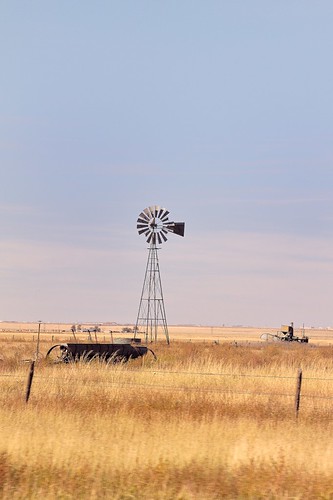
Aermotors of Rte. 66

Route 66, Shamrock, Texas

Hard Blow

North of Rio, Illinois on U.S. 150

The self-oiling Aermotor windmills, produced in four different models between 1915 and the present time, are the most common of all windmills seen in the field today. The key to the Aermotor is its wind wheel.

The windmills were developed in the early 1880's by engineer Thomas O. Perry and adopted by LaVerne Noyes, the founder of the Aermotor Company. This wheel consists of curved galvanized steel blades which are riveted to steel wheel clips which in turn are riveted to curved bar steel rims.

Self-oiling Aermotor windmills were made in a full range of sizes including six, eight, 10, 12, 14, and 16 foot sizes. From 1929 until 1966 a large 20' mill, weighing 4,900 pounds and having a five-gallon oil reservoir, was manufactured for deep well pumping or for use in localities where large volumes of water was needed from shallow depths. Most of these were seen in the desert Southwest.

All of the Aermotor mills were made by the Aermotor Company of Chicago until 1958, when the firm began the first of several changes in corporate ownership. Among the firms producing the mills since that time have been: Aermotor Division, Motor Products Corporation, Chicago, Aermotor Inc., Division of Nautec Corporation of Chicago, Aermotor Division, Braden Aermotor Corporation of Broken Arrow, Oklahoma: Braden Industries of Conway, Arkansas: and Aermotor Division, Valley Corporation of Conway, Arkansas. The manufacture of mills was shifted from Chicago to Broken Arrow in 1964, at which time the company began purchasing castings from foundries other than its own.

Tuesday, July 31, 2012

Cat Rock, Part II

From Dave Brigham:

After thoroughly exploring Cat Rock, the old skill hill in Weston, Mass., I scampered down the hill and into the surrounding woods (see July 27, 2012, "Cat Rock, Part I").

I had a nice hike around a small pond, through some verdant fields and past beautiful old trees. But what did I end up taking pictures of?

Rocket? Outside office Junk, close up Old...something-or-other

These pictures are from some sort of industrial/corporate garbage dump at the fringe of Cat Rock Park.

Cellar hole

This is a cellar hole that's across a small brook from the baseball field at the bottom of the old ski hill.

For more on Cat Rock, see May 21, 2012, "Graffiti Week, Part I."

Friday, July 27, 2012

Cat Rock, Part I

From Dave Brigham:

My buddy Ray hipped me to the New England Lost Ski Area Project web site a while ago. A few months ago, I was poking through the site when I realized there was an old ski hill about 15 minutes from my home.

Located in tony Weston, Mass., the terrifically named Cat Rock is short and steep. It's situated behind a baseball field, and is surrounded by some nice hiking trails.

Although the hill closed in the late '70s, there are still remnants of its heyday in the woods lining the slope.

Slope

(The hill)

Ballast

(Rope tow ballast)

Rope tow

(Rope tow towers)

Slab

(Base for the rope tow, at the top of the hill)

You are here

(Under the tow base are the geographic coordinates, which I think is so cool)

Cat Rock is also the place where I found one of the most vivid examples of graffiti in my short time as a photographer. To see pictures of the tagging I found on the ski hill's old snack shack, see May 21, 2012, "Graffiti Week, Part I."

For lots of personal remembrances of the hill, and some more photos new and old, check out this section of the New England Lost Ski Area Project web site.

Drive-Park-Shoot on the Cape

From Dave Brigham: Route 6A through Sandwich isn't pedestrian-friendly. I've driven stretches of the road many times in recent yea...