Showing posts with label windmill. Show all posts

Saturday, October 7, 2023

Wrapping Up the Christmas Tree Shops

From Dave Brigham:

Alternatve headlines:

The Year Without a Christmas Tree Shop

Do They Know the Christmas Tree Shops Are Closed?

It's the Least Wonderful Time of the Year

Happy Xmas (The Christmas Tree Shops is Over)

Run Rudolph Run (Oh, Nevermind, the Christmas Tree Shops Are Closed)
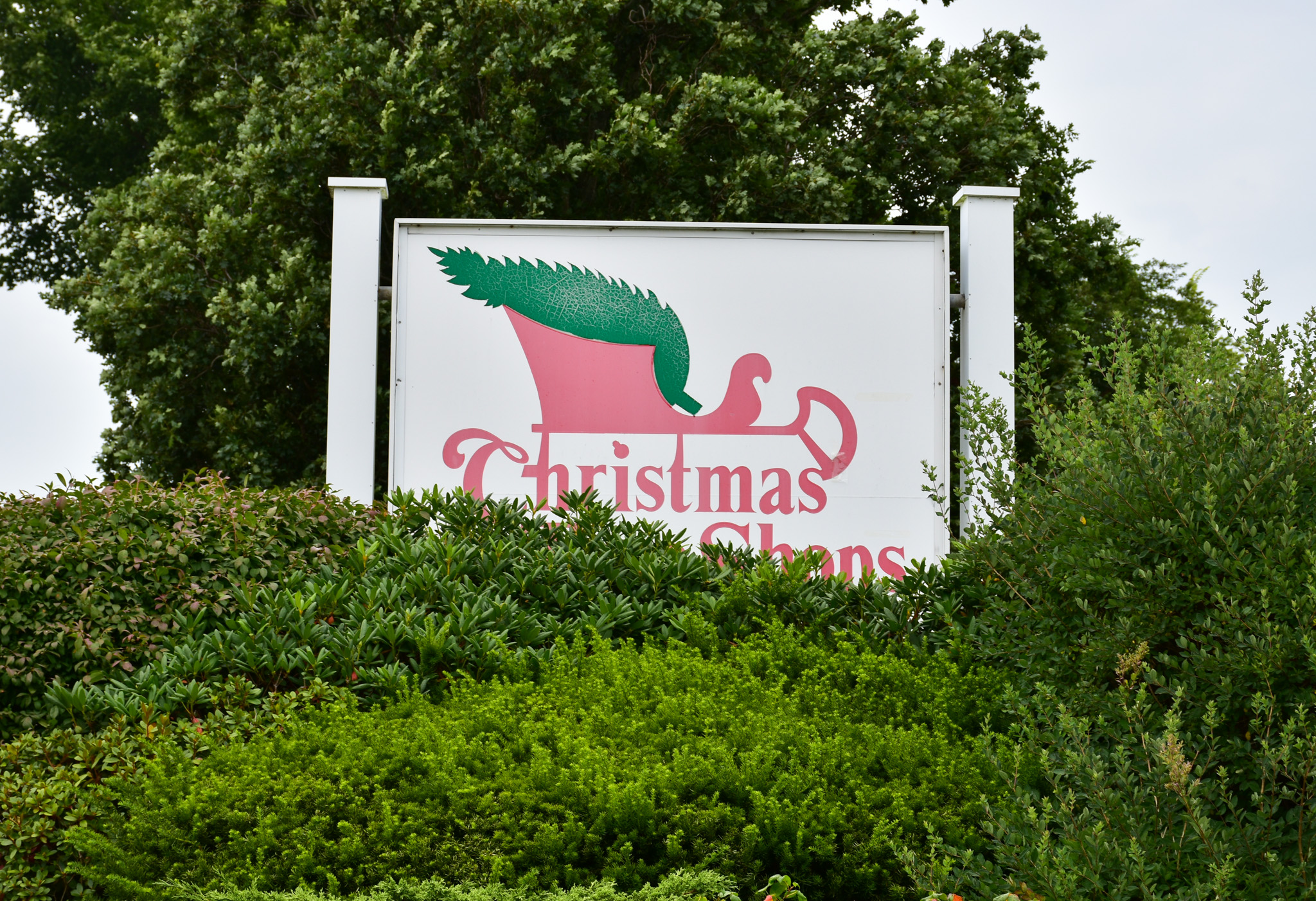
Maybe there was a labor dispute with the toymakers of the North Pole. Or a rift between executives about whether to expand their market to include items celebrating Krampus. Maybe it was all due to a Festivus celebration that got out of hand. Whatever the reason, the Christmas Tree Shops retail chain closed all of its outlets earlier this year.

I never set foot in one of the company's stores -- there were 72 at the peak of success, located in 20 states, mostly in the Northeast. In addition to the expected Christmas-y crap, the store sold bargain items such as food, household furnishings and toys. I drove past perhaps the most iconic of the shops, just over the Sagamore Bridge in Bourne, Mass., many times. I got a kick out of the faux-European barn/chalet architecture, which looked so out of place along Cape Cod Route 6.

Built in 1984 (a big part of me wishes it was 1894), the store wasn't the flagship of the retail chain, but its design set the tone for how some future outlets would look. The store in Pembroke, Mass., for instance, looks like a fraternal twin to the Bourne outlet. Wikipedia indicates that "[m]ost stores typically resembled older buildings (Colonial, Victorian, or even Old English barn styles, such as in Sagamore and Pembroke, Massachusetts; and Warwick, Rhode Island). Some, such as the Lynnfield, Massachusetts store, were even more conceptualized; that store was known for its lighthouse and fishing village motif."

The Bourne property -- 4.2 acres and including a large parking lot and a windmill (!) -- was assessed at $3.5 million this year.

The windmill added to the rustic European charm, and is remembered fondly by folks at this Reddit thread. "As far as I know, it's always been a Christmas Tree Shop and built that way to fit in with the location. I'm now in my 30's and remember watching the windmill turning from the inside when my mom took me shopping there as a kid," recalled moosetopenguin.

At one time, and perhaps still, the topper on the main buildng was the largest thatched roof in the world. The store's owners hired craftsmen from Ireland to do the job, from accounts I've seen online.

The roots of the Christmas Tree Shops are on Cape Cod. "What became known as Christmas Tree Shop began as an idea of Charles and Alyce Matthews of Yarmouth Port," according to the In My Footsteps blog. "In July 1946 33-year-old Charles and 37-year-old Alyce came to the Cape from New York. They purchased a home and a small store at the corner of Willow Street and Route 6A in Yarmouth Port that had previously been a grocery store owned by Harry Davidson."

(I found another write-up about the history of the company, in which the couple is referred to as "Mark and Alice Mathews." Sigh....a quick search turned up a few sources using either set of names, but clearly originating from these stories I've linked above. The In My Footsteps article seems to be more well-researched than the other.)

Regardless, here's the quick story after those two people started the business: The husband and wife team expanded the Yarmouth site by taking over some other space, and renaming the new store The Christmas Tree Shop. In 1961 the couple lost the store through a bankruptcy proceeding. In 1970, Charles and Doreen Bilezikian purchased the store, and within a few years had opened other outlets on the Cape. At one point, the company purchased the Cape Cod Coliseum to use as a warehouse (!).

In 2003, the Bilezikians sold out to Bed Bath & Beyond. "Under Bed Bath & Beyond, the chain began to expand beyond New England, arriving in Bed Bath & Beyond's native New Jersey, followed by Delaware and Pennsylvania," according to Wikipedia. "The chain entered the Midwest, with stores in Michigan and Ohio."

In late 2020, BB&B sold Christmas Tree Shops to Handil Holdings, a private company. Wikipedia brings us to the sad ending, the coal in the stocking if you will:

"On May 4, 2023...Christmas Tree Shops announced that it was preparing to file for Chapter 11 bankruptcy protection; the chain and its parent company, Handil Holdings, filed for Chapter 11 bankruptcy the next day....Ten underperforming stores were closed following the filing, in hopes of allowing the company to restructure operations and emerge from bankruptcy by August. However, after the company defaulted on a loan used for its restructuring, it was eventually announced that unless a buyer could be found for the chain by July 5, the chain would liquidate and close all remaining stores. With no buyer found, liquidation sales began at all stores nationwide on July 7, with gift cards and coupons being honored through July 21."

So what has become of this building since it was abandoned by Santa Claus? As Boston.com put it in its headline for a story about the new tenant, "Iconic Christmas Tree Shops location will become...Exactly what you probably think it will: Christmas is out, Halloween is in."

Yes, Spirit Halloween has replaced wreaths and bows and stockings and non-holiday junk with fake blood, sexy nun costumes and decorations designed to scare the crap out of you.

For more about the town of Bourne, see:

July 23, 2022, "Bourne On the 7th of July"

August 11, 2020, "What You Find When You Go Down Depot Road"

July 19, 2020, "Kickin' It Old School-house"

July 20, 2017, "Circling Buzzards Bay"

October 3, 2016, "Bourne Identity."

August 5, 2010, "Dark Side of the Motel"

July 28, 2010, "Two Hearts Beat As One"

Saturday, July 23, 2022

Bourne On the 7th of July

From Dave Brigham:

Ah yes, I am Bourne again!

No, I haven't accepted Jesus Christ as my savior, folks, but rather I have discovered another corner of the westernmost town on Cape Cod. I vacationed in Bourne's Pocasset village for many years, and have written posts about that area, as well as other parts of the town (see bottom of this post for links). Although I now spend my Cape time in neighboring Sandwich, I still drive through Bourne, and recently shot some photos along Route 6A in the Sagamore section.

Years ago, I fell in love with the Shingle Style church along Sandwich Road (Route 6A), at the corner of Westdale Park. On July 7th, I finally made some photos.

Dedicated on June 6, 1926, St. Theresa of Child Jesus served a parish filled with Italian immigrants, many of whom worked at the Keith Freight Car Manufacturing Company, which was located in the area. "In the 1880s, the various departments and plants of the Keith Car Works spanned approximately one and one-quarter miles and employed 968 people, not including office or management personnel," per MACRIS. There was company housing nearby, as well.

The freight car outfit closed up just a few years after the church was built, putting hundreds out of work. In the 1930s, the U.S. Government bought the plant and tore it down to make room for widening the Cape Cod Canal to 540 feet, MACRIS continues.

The Fall River Diocese closed St. Theresa on November 23, 2008, citing "the expectation of fewer priests, declining vocations for the priesthood, rising diocesan expenses and limited financial resources," per the above-linked article. In recent years, it was home to a thrift shop. Currently, it sits empty. I hope a new community will find its beauty irresistible.

A short walk away is the Sagamore Cemetery.

"Although the Sagamore Cemetery wasn’t incorporated until 1889, its first recorded burial took place in 1803," according to this Vacation Cape Cod article. "The plot is the final resting place for numerous Civil War soldiers and at least 29 former sea captains, making it a historically significant facility, even without the ghost stories."

Ghost stories, you say?

"In 1909, when the Cape Cod Canal was still under construction, 17 bodies from the Collins Farm Cemetery and 45 bodies from the Ellis Cemetery were moved to Sagamore to make room for the project," the article continues. "Officials marked the caskets with chalk, but a storm washed the names away before a reburial could proceed. As a result, officials had to guess at some identities, and there’s a non-trivial chance that some caskets are under the wrong headstones. The thought is that the spirits that continue to roam the cemetery can’t rest until the proper names are attached to the gravesites. Their restlessness is driving the ghost sightings."

I was there for just a few minutes, in broad daylight, and didn't seen any spectral beings. Darn.

The word "Sagamore" means chief, or leader, in various Native American languages. In addition to this area of Bourne, the word is also used for the one of the two bridges that spans the Cape Cod Canal.

"The bridge and its sibling the Bourne Bridge were constructed beginning in 1933 by the Public Works Administration for the U.S. Army Corps of Engineers, which operates both the bridges and the canal," per Wikipedia. "Both bridges carry four lanes of traffic over a 616 feet main span, with a 135 feet ship clearance. They opened to traffic on June 22, 1935.

On the opposite side of the road, I spied the top of the faux windmill that marks the location of an outlet of the Christmas Tree Shops.

Founded in the 1950s in Yarmouthport, on the Cape, as the Christmas Tree Gift Shop, the company grew to include several stores in Massachusetts and New England, per its web site. In 2003, Bed Bath & Beyond bought the local chain and grew it outside New England. "In 2020, a new chapter began, as CTS became an independent company owned by Handil Holdings. Under our new leaders, Pam and Marc Salkovitz, we operate 80 stores in 20 states with plans to introduce ourselves to new communities."

The few stores I've seen locally have these fake windmills, alongside buildings that look like Swiss chalets. I'm not sure if all the stores share that motif.

Now for a random photo.

I don't think I've ever seen a repurposed traffic sign, a ghost sign, if you will. The original message was SPEED LIMIT 20, but it's been covered with NO PARKING COMMERCIAL VEHICLES. Municipal finances must be tight in Bourne.

OK, another random one.

I wonder if this King Cab Chevy still runs. Looks pretty good.

Next is the Harlow Pope Inn, a classic Greek Revival Home dating to 1835 that was renovated in 2004 and turned into a charming vacation spot.

As bed and breakfasts go, the Harlow Pope is small, with just two bedrooms and a common room.

There is a "For Sale" sign outside the Quaker Process Printing Company building.

Established in 1950, the business produced letterheads, envelopes, business cards, announcements, wedding invitations, and attorney stationery for customers throughout New England, per its Facebook page, which hasn't been updated in more than two years.

I want to wrap this up with a place that is still in business, and whose sign I have had my eye on for years.

Dr. Gregory Bodrie works out of a large former home (or perhaps part of it is still a residence) right on Route 6A. According to this CapeCod.com article from 2015, he also regularly does rounds at several local hospital and nursing facilities.

For more about Bourne, see below:

August 11, 2020, "What You Find When You Go Down Depot Road"

July 19, 2020, "Kickin' It Old School-house"

July 20, 2017, "Circling Buzzards Bay"

October 3, 2016, "Bourne Identity"

August 5, 2010, "Dark Side of the Motel"

July 28, 2010, "Two Hearts Beat As One"

Monday, August 6, 2012

Blowin' In the Wind

From Pete Zarria:

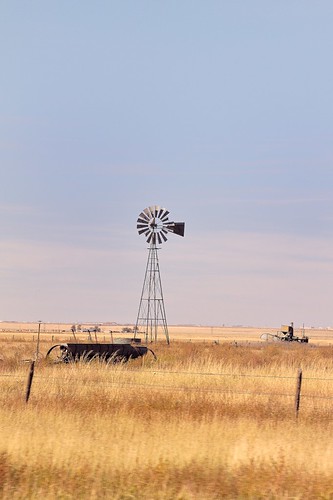
Aermotors of Rte. 66

Route 66, Shamrock, Texas

Hard Blow

North of Rio, Illinois on U.S. 150

The self-oiling Aermotor windmills, produced in four different models between 1915 and the present time, are the most common of all windmills seen in the field today. The key to the Aermotor is its wind wheel.

The windmills were developed in the early 1880's by engineer Thomas O. Perry and adopted by LaVerne Noyes, the founder of the Aermotor Company. This wheel consists of curved galvanized steel blades which are riveted to steel wheel clips which in turn are riveted to curved bar steel rims.

Self-oiling Aermotor windmills were made in a full range of sizes including six, eight, 10, 12, 14, and 16 foot sizes. From 1929 until 1966 a large 20' mill, weighing 4,900 pounds and having a five-gallon oil reservoir, was manufactured for deep well pumping or for use in localities where large volumes of water was needed from shallow depths. Most of these were seen in the desert Southwest.

All of the Aermotor mills were made by the Aermotor Company of Chicago until 1958, when the firm began the first of several changes in corporate ownership. Among the firms producing the mills since that time have been: Aermotor Division, Motor Products Corporation, Chicago, Aermotor Inc., Division of Nautec Corporation of Chicago, Aermotor Division, Braden Aermotor Corporation of Broken Arrow, Oklahoma: Braden Industries of Conway, Arkansas: and Aermotor Division, Valley Corporation of Conway, Arkansas. The manufacture of mills was shifted from Chicago to Broken Arrow in 1964, at which time the company began purchasing castings from foundries other than its own.

UPDATE: Guido's Court

From Dave Brigham: Longtime readers of this blog might recall that every once in a while I check in on a quaint campo di bocce in Brighto...