Showing posts with label new hampshire. Show all posts

Friday, July 16, 2021

Steps Away from An Eyesore, a Quaint Town Common

From Dave Brigham:

I recently spent a little bit of time in Troy, NH, something I'd wanted to do for a while. I pass through that town a few times a year on my way to play music with friends in the Granite State, and stumbled across an old mill complex a while back. That place, the abandoned Troy Mills, proved to be a fantastic photo opportunity (see June 21, 2021, "Covering a New Hampshire Blanket Mill"). Unfortunately for the people of Troy, it has been an eyesore for nearly 20 years.

After checking out the mill, I strolled through the quaint area around the town common. Here's what I found in Troy, which was incorporated in 1815, made up of parts of the towns of Marlborough, Fitzwilliam, Swanzey and Richmond.

Troy's town hall stands at the head of the common, which is an island in the middle of the bisected Route 12. Completed in 1815, this quintessential New England building was originally a meetinghouse, as I'm sure you guessed, where religious services and town meetings were held, according to this excellent Living Places article.

During those early years, both a local branch of the Congregational Church, as well as the First Congregational Society of Troy, used the meetinghouse. I'm not sure when the building became town hall.

I love the contrast of the red-brick house with the bright-white town hall. According to the Living Places article linked above, the house, at 12 Central Square, is known as a side-hall home. It was built by Stephen Wheeler, who operated a store and staging business. In later years, James Stanley, the cemetery sexton, ran a barbershop and later an undertakers' shop behind this house.

In the background of the photo above you can see an old barn. Below are close-ups of the one you can see, as well as a second one behind it.

Those buildings were built by Troy Mills for storage in 1901.

In the middle of the aforementioned common is a lovely little bandstand.

The bandstand is a newer addition to the common, although there was one located here previously. There was once a Troy Brass Band, which likely played at the old bandstand.

Just off the southern end of the common, behind Troy Deli & Marketplace and the Thai Bamboo restaurant, sits the wonderful Kimball Hall.

Originally home to the Odd Fellows fraternal club when it was built in 1901, Kimball Hall is currently home to the Troy Historical Society. I'm guessing that in the heyday of the mill, this place was jumping with dances, weddings, social club meetings and other events. From the historical society's Facebook page: "Folks who would like to tour the Cheshire Railroad Depot may stop at Kimball Hall to request it be opened."

I love that. Speaking of the depot....

Located just steps away from Kimball Hall, the station is known officially as the Troy Cheshire R.R. Depot. This fantastically restored place dates to 1847. During the latter half of the 19th century and well into the 20th, the station was kept busy by deliveries for Troy Mills and a nearby quarry, as well as by visitors to Mount Monadnock, located a few miles away in neighboring Jaffrey.

Passenger service along the rail line ended in 1958, freight service in the late 1960s, according to the web site above. Eventually the station was converted to a private home; the abandoned rail bed was maintained by the New Hampshire Department of Transportation for recreational purposes, and is now part of the Cheshire Recreational Rail Trail.

In 1998, the Town of Troy acquired the station and in 2002, restoration began. Check this photo gallery of the restoration.

Across the former rail bed from the station is an old barn/storage building that I'm guessing was once part of the railroad.

Folks visiting Troy via train might've stayed at the Kimball Hotel and Residence, below, which was built in the 1870s.

The former hotel is Troy's only example of a mansard-roof structure, according to this walking tour document.

I'm going to wrap up with a few shots from the Village Cemetery (formerly known as the Old Cemetery), which dates to 1785.

(I've never seen a gravestone age to this color.)

Monday, June 21, 2021

Covering a New Hampshire Blanket Mill

From Dave Brigham:

When I drive by a place like this, and I don't have my camera....

....you know I'm gonna return to shoot it. Took me several months to get to the former Troy Mills complex in New Hampshire with my camera in hand, but I never doubted I would.

In the late winter of 2020, after jamming with The Slade Wiggins Band in Keene, NH, I took a funky way home to Massachusetts. I was a bit lost as I cruised through Marlborough and into Troy, but not worried. As I wound my way along Monadnock Street, all of a sudden I found myself staring at that industrial behemoth in the photo above.

"Where the hell am I?" I wondered. I slowed down and marveled. "I need to get back here," I told myself. Within 20 seconds, I was back on South Main Street, my usual route heading southeast back toward home. So I knew exactly where to go whenever I was able to return.

Earlier this month, I finally got my chance to kick around the town of Troy, including, of course, the complex that was once home to Troy Mills, which made horse blankets. I will write about other backside features of Troy in another post.

This old mill, which was established in the mid-19th century (I've been unable to pin down an exact date), is suffering like so many other industrial complexes I've featured on the blog over the years. And of course the town -- population 2,145 at the 2010 census -- is suffering too, both in terms of having a gigantic eyesore in its midst, and a loss of potential employment and tax revenue. But there may be hope on the horizon.

From Wikipedia: Troy Mills "served as the backbone of the town's economy for nearly 100 years. In 1865, the company was sold by founder Thomas Goodall, who in 1867 would establish Goodall Mills in Sanford, Maine. Troy Mills declared bankruptcy in late 2001, and ceased operations in 2002."

For a time, the mill complex housed two spin-off companies: Knowlton Nonwovens and Cosmopolitan Textiles, Wikipedia continues. The former company was acquired by Northeastern Nonwovens and moved elsewhere. I'm unsure what became of the latter outfit. In 2008, a plan was announced to renovate Troy Mills into a retirement community, according to to Wikipedia. I'm guessing the financial calamity of that year put the kibosh on that plan. At this point, there is little to nothing going on at the old blanket mill.

Here's a quick history of the years since the mill shut down, courtesy of this Keene Sentinel article:

"[T]he textile operation had left the land and buildings polluted enough that it was designated a federal Superfund site, and it’s easy to see how the closure could wreak havoc with the town for decades....The town’s signature business wound up in bankruptcy court in West Virginia, where the company’s headquarters had relocated. The town, seeking to protect a major source of revenue — Troy Mills accounted for about $1 million, or 8 percent, of the town’s tax receipts — and nearby property owners and residents, held a lien on the property. The court eventually awarded the entire site to the town.

"And that was the beginning of a lengthy saga that included the selectmen setting up a new panel specifically to deal with the property, multiple developers expressing interest, millions of dollars spent cleaning up the pollution, and lots of infighting and scandal. Much of this might have been avoided had the selectmen opted simply to auction off the property immediately. Planning board members and others argued for that approach, and brought the issue to voters, but as with other huge, vacated industrial sites in the region, the potential was too much to ignore.

"So it has sat, though not inactive. At times, parts of the buildings have been leased to other businesses. And there’s been [an] ongoing cleanup effort. The EPA substantially finished its Superfund work in 2005, but that was only part of the pollution. The rest was cleaned up over the next decade or so using more than $1.5 million in Brownfields grants and other funding.

"[T]he Troy Redevelopment Group, appointed by the selectmen, entertained a variety of developers and plans. Among the various visions woven for the site: residential condo units; senior assisted living; an upscale grocery store; a heated indoor swimming pool; a pharmacy; a health club; rooftop gardens; a movie theater; a hydroponic fish farm, distribution network and farm-to-table restaurant; storage units; a conference facility; high-speed Internet service; educational and research facilities; a charter school; and, of course, manufacturing.

An out-of-state developer announced a plan to spend upwards of $30 million to convert the mill into some of the above-mentioned uses, but eventually bowed out. In May 2020, a group called Cougar Capital offered to buy the site from the town, and to create 135 apartments there.

I'm not sure if an agreement was ever made with Cougar Capital, which, among other projects, has converted a former toy factory in Leominster, Mass., to apartments. I'll update this post if and when I find out more.

In addition to site clean-up and demolition, another thing a potential developer would have to deal with is the river running through the site.

Also on site (I think; this might be a separate property) is an old barn that looks great from the front....

...but which is collapsing in the rear.

I hope something gets developed at the old mill site. So many places like this have been turned into apartments/condos, senior living, artist lofts, etc. Hard to know what would work best in a quiet town in southwestern New Hampshire....stay tuned for a post about other stuff I found in my trek through Troy.

Friday, November 22, 2019

Office of the Dead

From Dave Brigham:

This quaint little abandoned building in Winchendon, Mass., was just the fix I needed on a recent trip up and back to New Hampshire.

I'd gone to Keene, N.H., to play music with my longtime friend Ken in a little combo we're calling The Slade Wiggins Band. On my way back home to Newton, Mass., I passed through Winchendon, a small burg on the Granite State's border that is known as Toy Town. I stopped for a few minutes to check out the town's replica giant toy horse (see July 18, 2019, "Trotting Through Toy Town"), but felt I needed something more to satisfy my suburbex urges.

As I drove east on Route 12 toward the outskirts of downtown, just before Gourmet Donuts, I looked across a small body of water and spotted a telltale smokestack. That could only mean one thing: an old mill.

After continuing on Route 12 just a short distance, I turned north on Glenallen Street, figuring I'd try to loop around to the northwest and find that stack. I passed two graveyards -- the Massachusetts Veterans Memorial Cemetery and the Calvary Cemetery -- and noticed the above building on the same side of the street as the latter burial ground. I made note of it but kept driving.

I didn't want to delay my arrival home too long, so after just a short time, feeling like I was heading in the wrong direction to find the old mill, I turned around and headed for the faded little building in the photo above (looking at Google Maps later I realized I could've made that loop, but I surely would've found more and more things to explore and didn't have the time). On my way back, I noticed an old brick building hulking through the woods. Noticing no public driveway, I put it in my mental notebook for another time. Subsequent research online has led me nowhere about this possible old mill hard by Millers River.

In a minute or two, I pulled into the parking lot for this well-weathered building with the perfect patina, looking like something out of Suburbex Monthly.

After walking around the place, I ventured inside. I'm not in the habit of crossing the threshold of abandoned places in cities, but nobody (living) was around in this quiet town and so in I went. There was plenty of light inside and I was sure nobody was in there having sex, doing drugs or playing rock and roll.

This place used to be the office for the Cavalry Cemetery, I guess. There wasn't much to look at on the first floor, so I went upstairs.

Things were a little more interesting up there.

And a little spookier.

For more about cemeteries, see:

September 10, 2018, "A Boneyard Within a Cemetery"

October 20, 2017, "Dead Reckoning"

January 13, 2012, "Peaceful Rest"

Sunday, October 6, 2019

Remembering a Foundational Moment

From Dave "Keene State Owls Rule!" Brigham:

Longtime readers of this blog will perhaps recall the inaugural post, nine-and-a-half years ago, in which I traced my curiosity about what I eventually dubbed "the backside of America" to a canoe trip I took with my father when I was about 12 years old (see March 1, 2010, "Take Me to the River"). I saw my hometown of Simsbury, Connecticut, from a new angle -- the rear -- as we paddled on the Farmington River. I was fascinated by the hindquarters of homes, stores, factories, churches, you name it, that I'd previously only seen from the road. The fronts of these residences and companies and houses of worship weren't necessarily beautiful, but they made good efforts because Simsbury is a well-to-do town. The backside of these places, on the other hand, was where I saw rusting cars, rotting porches, overgrown patios, dumpsters, hanging laundry, fallow farmland, etc.

The photo above represents another foundational moment for me in my quest to find the big, beautiful backside of America. We're looking at the Keene branch of the Fraternal Order of Eagles. The national organization calls its clubs "aeries," which I love. Keene's is #1413; like all the others, its mission is to raise money for "eight major charities, including kidney, heart, diabetes, cancer and spinal cord injury funds, a children's fund, memorial foundation and the Golden Eagle Fund," per the national web site.

Also, drinking.

When I was a senior at Keene State back in 1986/87, one night I went on what I dubbed a "back-lot tour" with two friends: Peter and Kristen. Peter played guitar, Kristen sang and I played bongos as we walked through downtown Keene and along the darker side streets populated with old mill buildings, train tracks and places like FOE Aerie 1413. As we rounded the corner from 93rd Street to Church Street and saw all these people hanging out front, with loud music leaking through the door, I was transfixed. "What IS this place?" I asked in wonder. I'd been at school for three years and been to my fair share of on-campus and off-campus parties, but I'd never seen a place like this where the locals partied.

I wrote about Keene's FOE chapter earlier this year. Not thinking I'd actually snap a photo of my own, I shared a Google Maps image (see Feburuary 26, 2019, "To All My Friends!"). Go ahead and read that post, as it covers much of the same material in this one, but with more colorful language.

Friday, January 12, 2018

Jesus, Give Us a Sign!

From Joe Viger:

(Chichester, NH. Click on the photo if, like me, you have old eyes and need to enlarge the image.)
(I love this photo, as I love just about every photo that Joe Viger makes. I also have a thing for oddball religious folks, so this one hit a home run for me. Of course, there's more to the story of Signs4Jesus than meets the eye....Elsewhere in Chichester, the man behind this effort tore down an old farm house and the trees surrounding it, in order to erect a billboard that flashes Bible messages. As a New Hampshire state rep, Timothy Horrigan, wrote back in 2011, "I humbly suggest that God was honored more by the trees than by the billboard." -- DB)
Tuesday, April 11, 2017

Anniversary Post #4: My Favorites from 2013

From Dave Brigham:

Welcome to the fourth installment in a series celebrating the 7th anniversary of the blog (for links to the prior three installments, see the bottom of this post). This post covers 2013.

I need to mention that Joe Viger has contributed some amazing photos and fantastic write-ups over the years, but I'll be linking to very few of them in this series. Why? Because Joe -- an amazing photographer who has served as a mentor of sorts to me in that regard, and a great friend I've known for nearly 30 years -- has changed the security settings on his Flickr account so that many of his photos that have run on this blog show up as broken links now. I will instead direct you to his wonderful online portfolio.

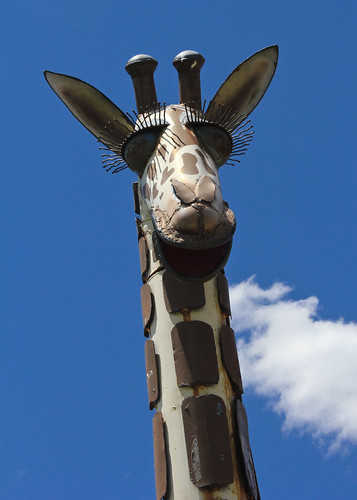
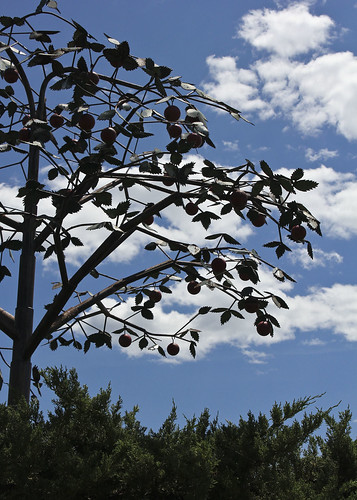
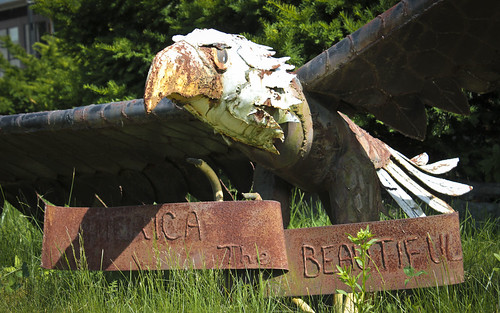
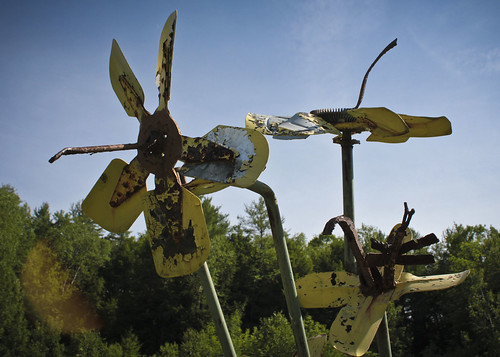
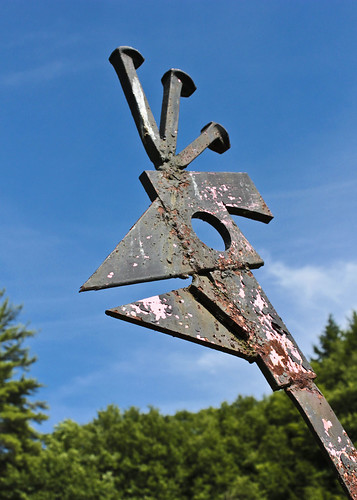
On January 17, 2013, Heidi Waugaman-Page shared several cool shots of what I guess you would call outsider art, taken in Vermont and New Hampshire. In "Roadside Art," we see a giraffe, an eagle, some flowers and a tree, all crafted from old, and sometimes rusting, metal.

My favorite aspect of exploring for this blog is to stumble across something I didn't know I was looking for. Second to that, I suppose, is knowing roughly what I'm looking for, but still being amazed by it upon my arrival on the scene. Such was the case in my January 30, 2013, post, "Whimsical Woodlands." I'd read online about a magical place called Martini Junction and set out to find it in Needham, Massachusetts. I got turned around a bit in the woods, but when I found the spot, I was just about overwhelmed with joy.

(Scenes from Martini Junction.)

On February 7, 2013, I wrote for the second time about a mystery that has bugged me since I was 14 or 15 years old. In "President Little, Part II: From Myth to Man," I updated the story of an abandoned house in my hometown that I'd wandered through with friends when I was in high school. I learned a bit more about the man who'd lived there from some some folks who knew him. I also tried to get in touch with his son, who at that point was elderly, to ask him why his father had left everything he owned behind in his house when he died.

(What's left of the house where President Little once lived.)

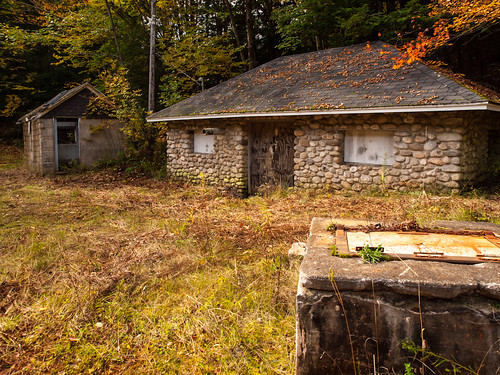
On February 26, 2013, Kristen Smith shared with us a picture from an abandoned camp in New Hampshire, in "Abandoned, But Solid." Ah, the simple pleasure....

I take a fair amount of photos of churches and religious icons, but I've never seen anything like what James M. Surprenant shared with us in his March 25, 2013, post, "Jesus Saves," featuring a beautiful black-and-white shot taken in Eden, North Carolina.

In "Down On the Farm," from May 7, 2013, Pete Zarria shared some gorgeous photos of farms from Iowa, Indiana and Wisconsin.

While we here at The Backside of America focus quite often on abandoned or forgotten or collapsing or rusted or graffiti-covered places, we also love old places that have been restored. On May 28, 2013, in "Small, But Useful," I wrote about a tiny building that started life in the 1840's as a private school, and which over the ensuing decades served as a train station, a summer house and an art studio.

On June 14, 2013, Pete Zarria posted numerous fantastic shots of ghost signs. "More Signs That Say 'Boo'" featured photos from places in Wisconsin, Illinois and Missouri.

Just three days later, on June 17, 2013, I published "Powda House," which is about the most significant historic structure in Dedham, Massachusetts, and most likely the smallest as well.

I've never trespassed inside a building in service of this blog. I have, however, done some external trespassing, although on a very small scale. Two and a half years after posting about the former O'Hara Waltham Dial Company, I revisited the site, this time checking out the backside. Not sure why I didn't think of doing that sooner. In the July 8, 2013, post, "What a Dump: A Different View," I found myself face to face with this sign:

I didn't go over the fence, but I felt that in simply walking around the area, I was potentially exposing myself to hazardous waste. I snapped a few pictures and moved on.

August 19, 2013, brought another post by Pete Zarria, "Backside Business," featuring cool shots of old hotels, markets and restaurants in Iowa, South Carolina, Wisconsin and Missouri.

On September 4, 2013, I published the first of a four-part series about Chelsea, Massachusetts, "Chelsea Stroll." I shot photos of a dive bar, a really old municipal garage, a run-down residency hotel and a Russian steam bath. I did not, however, venture to take pictures of King Arthur's Lounge.

I'm happy we can share at least one post by Joe Viger. On November 18, 2013, he posted a beautiful shot of a back alley in New York City, in "New York Escape."

In "The Big Reveal" from December 10, 2013, I got a rare picture of a mural that was painted on a school in my adopted hometown on Newton, Massachusetts, in 1981. The mural had been covered for years by a loading dock, but when construction workers began renovating the building, they revealed it for just a short time, before it was torn up.

To wrap up the year, on December 26, 2013, I posted the first of several posts about named buildings, "What's In a Named Building? (Part 1)."

Here are links to the previous three installments of this series:

"Anniversary Post #3: My Favorites from 2012."

"Anniversary Post #2: My Favorites from 2011."

"Anniversary Post #1: My Favorites from 2010."

Monday, December 12, 2016

Behind Bars

From Dave Brigham:

This foreboding building -- the prison at the Portsmouth Naval Shipyard in Kittery, Maine, -- has been closed for 42 years. Wouldn't you just love to get in there? Poke around the cells and look for dungeons and rats and skeletons and ghosts? Scare yourself silly in the middle of the night?

Few people not wearing black-and-white striped jumpsuits or naval uniforms have seen the inside of this place since it was completed in 1908. The prison looms over the Piscataqua River just across from the bustling hipster-town of Portsmouth, New Hampshire.

My family and I recently went on a harbor cruise, which took us past beautiful old homes and sentry-like lighthouses and run-down forts. But the prison is the most impressive feature of the cruise, in my mind.

In addition to Navy and Marine offenders, the prison played host over the years to German U-boat crews near the end of World War II, according to this article.

There has been talk of redeveloping the massive prison -- at the time of its opening it was the largest poured concrete building in the world -- into apartments or condos, to no avail.

For a closer look at the outside of the prison, check out these two videos:

Tuesday, February 26, 2013

Thursday, January 17, 2013

Roadside Art

From Heidi Waugaman-Page:

Summer was metal and rust for me. Some was even flowers.

Driving to Chester, VT, I would pass some of these structures daily, in both Walpole and Ashland, NH. Then when I explored, I found more on the side roads and behind buildings. I could not find anything that had a signature or plate that stated who the artists were on some of the rustiest pieces.

AlysonsOrchards_6341-5x7 AlysonsOrchards_63465x7

The giraffe and apple tree are by the same artist at Alyson's Orchard on Route 12 in Walpole, NH but I couldn’t locate the name.

These are in Ashland, NH:

IMG_6435-5x7 IMG_6443-5x7 IMG_6425-5x7 IMG_6417-8x12 IMG_6431-5x7

Tuesday, January 1, 2013

Snowmobile???

From Mick Melvin:

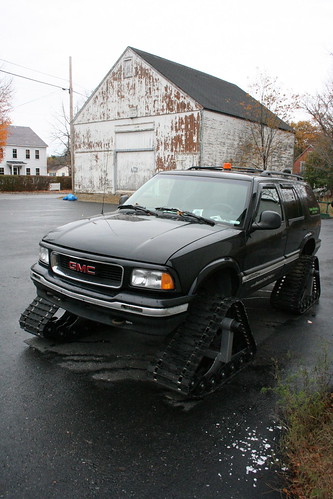
GMC

My wife and I visit New Hampshire a few times a year. We always see great backside photo opportunities. I thought of one such photo I took a couple of years back. This hybrid snow truck would have helped me in the recent snow storm in Connecticut. I took this shot in Troy, NH. I would have loved to see it in motion. Be safe out there Backsiders.

Former Rock Club in the Fenway Slated for Redevelopment

From Dave Brigham: Sometime in the late '90s/early aughts, I saw one of the greatest Boston bands of all time, the Upper Crust , in a ...