Showing posts with label former school. Show all posts

Saturday, February 4, 2023

I Seek Newton, Part XIII: Newtonville (Section 2)

From Dave Brigham:

In the first Newtonville post, I discussed and showed photos of the former Orr Block buildings and the Trio Newton complex that replaced them (see January 28, 2023, "I Seek Newton, Part XIII: Newtonville (Section 1, The Orr Block/Trio Newton)").

In this post, I will cover churches, both current and former; some one-time schools; apartment buildings; open spaces; a Masonic Temple; and much more. There will be one more Newtonville post, which will bring my "I Seek Newton" project to a close, as I will have completed all 13 of Newton's villages. By the way, I hope at least one person out there has caught on to my word play with I Seek Newton.

Divided by the Massachusetts Turnpike and the commuter/Amtrak railbed, Newtonville lost some 19th century houses, commercial buildings and a railroad station over the course of the railroad tracks being lowered, Washington Street being widened, and the pike being carved through into Boston. Still, I found plenty to check out.

I'll start with churches and former churches, because there are a handful of each.

St. John's Episcopal Church, on the corner of Lowell Avenue and Otis Street, was built in 1902 in the Neo Gothic Revival style. Additions in the Tudor Revival style were added later. The parish was established in 1898.

The rear wing is the home of Bowen Cooperative Nursery School, where (shameless plug alert!) I once did a reading of my children's book, A Wicked Good Trip!

On the opposite side of the Newton North High School complex from St. John's is the United Methodist Church of Newton, on Walnut Street.

The church itself was constructed in 1980, but it is attached to a former private residence that dates to 1912, according to MACRIS.

Frederick Perry built the house in 1912. "After World War II this house became part of the new Newton Junior College which was established in 1946 by the school committee and the city of Newton to expand educational opportunities for Newton youth and returning veterans," MACRIS indicates. "The Perry house, then known as Walnut Hall, was enlarged in 1966 by the addition of a modern wing which included classrooms, labs and offices. Walnut Hall, along with Claflin Hall...and several other buildings housed Newton Junior College until 1976 when it closed, due to declining enrollment and changing times. In 1979, Walnut Hall was sold by the city to the United Methodist Church of Newton. Renovations...included the addition of a pitched roof and pre-fabricated steeple to the wing of Walnut Hall to convert it for use as a church. Some of the stained glass windows from the former Newtonville Methodist Church were also included in the renovated building."

Due north on Walnut Street, on the other side of the turnpike, is the Boston Chinese Evangelical Church.

Built in 1895, this Romanesque Revival beauty was designed by Hartwell and Richardson, a well-known architectural firm in and around Boston in the late 19th and early 20th centuries. The firm's buildings include the First Spiritual Temple in Boston, which I profiled in February 2020; the former Hyde School in Newton Highlands, which I included in my write-up of that village; and the Youth's Companion Building (aka the Pledge of Allegiance Building), which I featured in my post about Boston's Bay Village neighborhood.

The firm also designed Newtonville's Masonic Temple, which I will discuss below.

Known historically as the Central Congregational Church, this "dressed granite structure marks the prosperity of the congregation and the community as it replaced a wooden building at a cost of more than $100,000," MACRIS indicates. The Boston Chinese Evangelical Church took over this building in 2003. "The Newton Campus began with almost 200 worshippers, with worship services in English and Cantonese, and Sunday School classes for every age group," according to the congregation's web site. "Since 2010, we have added a Mandarin-speaking ministry."

The church also has a campus in Boston's Chinatown neighborhood.

In the above photo, notice the church's four-story square tower and its steeply pitched roof. Now look at the beautiful old residence in the photo below.

Located at the corner of Walnut and Watertown streets, this place features six condominium units, and was built in 1880, according to the Newton assessor's database. In the years since I began gathering information about Newton's villages, at some point I ran across a report relating this house to the Central Congregational Church. For the life of me, I haven't been able to track down that information since actually working on the Newtonville posts. I believe what I read was that the tower on the northern corner of this house inspired the architects (most likely William Richardson, who was a Newtonville resident) when they designed their church.

That's it for religious congregations situated in traditional buildings. There is another group of worshipers, Elevation Chapel, located in a building on Lowell Avenue that dates to 1974 that appears to have started life as an office building. Until recently, there was also a Swedenborgian Church congregation in a traditional church buliding on Highland Avenue. That group in October 2021 entered into an agreement to discuss a sale of the building to the New Art Center, a non-profit community arts organization that has been located nearby for more than 40 years. The center is located in another former church, which I will discuss below.

(The former Swedenborgian Church.)

I really like this Neo Gothic Revival church; it's like a quaint English village church. It was designed by Ralph Adams Cram, a New Hampshire native whose work includes buildings at the U.S. Military Academy at West Point; the Gothic Revival Church of St. George at St. George’s School in Rhode Island; the Gothic transformation of the Cathedral of St. John the Divine in New York City; and many more. The firm he founded, Cram and Ferguson, lives on today under that name (after many other iterations in the intervening century).

The Swedenborgian building, constructed of Roxbury conglomerate puddingstone and Indiana limestone (thanks, MACRIS), rose in 1893 alongside a parish house that experts estimate was built in 1888.

(The parish house.)

Cram was commissioned to design the church by the Swedenborgian Society, which had moved from Boston to Newtonville in the 1840s. The building replaced a smaller wooden chapel, which was moved to the rear of the property and may have been incorporated into the parish house or a side wing of the church, according to a document included in the MACRIS profile.

In recent years, the congregation was known as the Church of the Open Word. After signing the agreement with the Church of the Open Word in late 2021, the New Art Center conducted due diligence on the site. On March 7, 2022, the City of Newton appropriated $94,000 from its Community Preservation Act fund to the New Art Center to complete the plans and studies necessary to move forward with the restoration of the former church. I'm not sure of the status of that review, and of the sale of the building.

(Details of the former church, which will require some exterior renovation, as well as significant modifications inside in order to be transformed into an arts space.)

Below is the current New Art Center space, located in what was once the Newtonville Universalist Church on Washington Park, one of the true gem neighborhoods in the city.

Dedicated in 1873, the church was built by the Newtonville Universalist Society, "the outgrowth of a missionary effort in 1870 by members of the former Newton and Watertown Universalist Society (organized in 1827) and the former Watertown Universalist Church," according to a document from the Harvard Divinity School Library. The society and the church dissolved in 1937. Notice in the photo at that link that a steeple once towered over the building. It was lopped off in the intervening years. I'm not sure what use was made of the building between when the Universalists dissolved, and the art center took over.

The next former church is located at 391 Walnut Street, very close to the high school, and, I imagine, has some amazing interiors with really cool views through those big windows.

Completed in 1927 as the Newtonville outpost of the Church of Christ, Scientist, this beautiful Colonial Revival building was converted to condos at some point. "By the early 20s [the Newton congregation] had gathered sufficient funds to engage the firm of Densmore, LeClear & Robinson to plan a new church," according to MACRIS. "Edward Densmore, senior member of the firm, was responsible for a number of Boston buildings including the Salada Tea Company Building (1919) and the Park Square Office Building (1927)."

The final former church on this tour is the old Newtonville Methodist, which has a long history that includes several renovations and a time where there was a restaurant in the main sanctuary.

From our friends at MACRIS: "In 1863 [the Newtonville Methodist congregation] bought a brick church on Walnut Street at the corner of Newtonville Avenue, left unfinished by the Baptists. This so-called 'brick church' was completed in 1868 and substantially rebuilt in 1896. The congregation grew in these years and by 1911 a committee was formed to consider expanding the church. However, no action was taken until 1922 when plans were drawn up by the architectural firm of Woodbury and Stuart. According to the building permit the old building was extended on both sides and in the front. The exterior was refaced vith granite on brick and a five story school building was added at the rear. Dedication for the newly enlarged church was held on December 7, 1924."

In 1980, the Newtonville and Newton Centre Methodist congregations combined, becoming the United Methodist Church, which is profiled above. The Newtonville church building was sold in 1983 for commercial use. The former school rooms were turned into offices, and the sanctuary was converted to a restaurant (!). I know at one point the eatery was a Chinese restaurant, but I don't know if that was the original one. I believe the main sanctuary is now also offices.

A bell, manufactured by H.N. Hooper & Company of Boston, is displayed in front of the old church. I assume it hung in the belfry at some point.

Let's move from former churches to erstwhile schools.

The beautiful old Claflin School, located at the corner of Walnut Street and Washington Park, was built in 1891. Listed on the National Register of Historic Places in 1984, it was designed in the Richardson Romanesque style. Like the United Methodist Church of Newton, the old school was also used as part of Newton Junior College at some point. It has been condominiums for many years.

That Claflin School was replaced by a newer one of the same name, which is also now residences.

Nestled in the woods above a small park along Lowell Avenue, the school was built in 1952. By 1988 it had been turned into Claflin School Studios, an artist studio/living space.

Down the hill of Lowell Avenue from the studios is Newton North High School, the latest iteration of which was opened in 2010, at a cost of nearly $200 million. That complex replaced one that dated to the 1970s, and which some folks said looked and felt like a prison. Before the '70s-era building was torn down completely, I made a photo of the exposed indoor pool, seen below.

Continuing the theme of "former" places, below is the Newton Senior Center, a Classical Revival building that started life in 1938 as the Newtonville branch library.

Built on the site of the former men-only Newton Club, the library was the largest in the system, due to its proximity to the high school. It was converted for use as a senior center in 1993. Big changes are coming to the building, which will undergo renovation and expansion and become known as the Newton Center for Active Living, or NewCAL. Read all about the project here.

The undisputed heavyweight of the main commercial drag of Newtonville is the Masonic Building.

Another Hartwell and Richardson beauty, the stunning temple was dedicated in 1896 after being commissioned by the Masons, the Dalhousie Lodge, the Gethsemane Commandery and the Newton Royal Arch Chapter, according to MACRIS. At its debut, the building featured retail/office space on the first floor, as is true today. The upper floors contained a public assembly hall, the first Newtonville branch library and the masons' quarters.

The building, which is still an active Masons lodge, is quite imposing, yet has fantastic details.

I would love to get inside. Do you think if I flashed my paternal grandfather's Mason credentials, they'd let me in and teach me the secret handshake?

In addition to all of the current and former churches, one-time schools and the behemoth Masonic Lodge, Newtonville features some really nice old apartment buildings. The one below is located on Highland Avenue, adjacent to the former Swedenborgian Church.

Built in 1892, the Joseph Swallow House was one of the few apartment buildings constructed in Newtonville before 1900, according to MACRIS. Joseph Swallow lived nearby, on Newtonville Avenue, and owned a stable in Boston, MACRIS continues. According to a Historic Newton brochure about Newtonville, this place was operated as Highland Villa, a private residential hotel, at the turn of the 20th century.

Between the Swallow House and Lowell Avenue to the west, there are numerous beautiful old homes in a variety of styles, dating to the late 19th century. Some of them have been renovated and expanded to include multiple units. The house at 50 Highland Avenue, shown below when it was up on jacks, will become another such project.

"The petitioner proposes to demolish a rear portion of the existing dwelling and the detached single car garage, renovate and expand the existing dwelling to accommodate two dwelling units, and construct a new two-unit structure to its rear, resulting in four single family attached dwellings in two structures," according to this City of Newton Planning and Development document from October 2021.

Back across to the eastern side of Walnut Street, we find my favorite Newtonville apartment building, located on Madison Avenue.

This building is my elusive crush. I love the entryway, the landscaping, the front door, the roof details, the interiors. But details are scant about this place. MACRIS hasn't written this place up, nor has the historical society. The assessor's database says this place was built in 1900, but you know how I feel about that date. There are eight units with hardwood floors, and parking in the back. That's all I know. Oh, 100 Madison Avenue - why do you tease me so?!

The final apartment building I want to showcase is on a dead-end off of Central Avenue.

1-6 Walnut Terrace was built in 1887...or 1910, depending on which source you believe. I'm going with the older date. I wish I could find out more about this place, which is tucked behind the Boston Chinese Evangelical Church.

To finish up this installment, I'm going to do something that I've done regularly throughout this series: break a village boundary. I've regularly forgotten things from one village and put it into another one's post - nothing ridiculous, just stuff that was close to the border line. In this case, I have to confess that the three locations below are actually in Nonantum, at least according to Google Maps. Hell, I LIVE in Nonantum if you consult that source, even though my zip code and the real estate report when we bought the house indicate that we live in Newtonville.

Anyway, borders are fungible, and the more important thing is that I cover as much of the city as I can.

So: Avery Woods.

Sandwiched between F.A. Day Middle School and the Albemarle Athletic Fields complex, Avery Woods came into the city's possession in 1959. Wool merchant Charles Avery, a Newton alderman from 1908-1911, bought the land in 1886, according to the Newton Conservators. The Avery family sold approximately 8.6 acres of this property to the City, stipulating that it be used for park and recreation purposes. Eventually, the parties reached an agremeent when Newton wanted to use part of the land to construct the middle school.

The wooded area isn't large, but is nice to explore, something my dog and I do regularly. There have been rumors over the years that a coyote has a den in there. Other sources tell me that one-time Newton resident Louis CK may have toked up in these woods back in the early '80s.

Anyway....

A short distance away, on North Street, is the former Captain Edward Fuller Farm house, which is thought to have been built in 1775.

Listed on the National Register of Historic Places, this beautifully restored farmhouse was built by Captain Edward Fuller, who served in the Revolutionary War. The Fuller family arrived in Newton in 1644, when it was part of Cambridge. John Fuller (1611-1698) "eventually acquired 1000 acres of farmland and built a house somewhat to the north and east of the present house," per MACRIS. The land was passed down through the generations to Edward Fuller, who built this house on the grave of a previous residence. The home's former barn was converted to a separate residence in 1950.

As you might expect from a member of a family that had been in the area for more than a century, and apparently doing pretty well, Edward Fuller, "like his predecessors, held various positions of authority in the town," per MACRIS. "He is reported as surveyor of highways in 1763, tithingman in 1769, warden in 1776, and other posts. He served on several committees and assisted in the construction of the Waltham Bridge in 1762. He served in the Revolution in New York in 1777."

The Fuller family owned the home until 1886. The City of Newton Atlas Map of 1929 indicates this property was owned at that time by Samuel Thurber. On the map, just northeast of the old Fuller site is New England Creamery Products Company. Across North Street, on the western side, is part of the former Albemarle Golf Course. Opened in the 1890s, the nine-hole course spread across parts of West Newton and Newtonville (aka Nonantum), and owned and leased contiguous properties including land belonging to the Fessenden School, according to this National Register of Historic Places document. Fairways spanned either side of Cheesecake Brook, along what is now Albemarle Road.

The clubhouse was located on Crafts Street, near the intersection with North Street, approximately where the southern end of Fessenden Street is today. In an ad cited in "A Walk Through Time along Cheesecake Brook," published by the Newton Conservators and the Newton History Museum, Some Newtonville Homes, from 1913, touts that the clubhouse is located "five minutes by the electrics from Newtonville Square."

Love that.

There were fairways between Fair Oaks and Nevada Street, as well as between Nevada Street and the Charles River. At the northern end of Albemarle Road, where it intersects with Nevada Street, there is a short footbridge, which I have been led to believe is a remnant from the old course.

I walk or drive past this bridge on a daily basis, and I sure hope it's a leftover from the Albemarle course. During the 1930s, as land values rose in West Newton, Fairway Drive (off Watertown Street) was laid out on land previously used by the golf course, according to the National Register document cited above. By the mid-1940s, the course had closed, the City had acquired the land and Albemarle Park was developed on part of the old site.

To read the history of Albemarle Park, check out this 2005 Albemarle Park Master Plan, which was assembled by Judith Kokesh as part of the requirements for her Certificate in Landscape Design from the Landscape Design Institute of the Arnold Arboretum of Harvard University.

Say that five times fast.

To see an action shot from the course, check out this photo at Digital Commonwealth.

OK, that wraps up the penultimate post in the series. One more to go!

Here are the previous posts in the series:

September 10, 2022, "I Seek Newton, Part XII: West Newton (Section 3)"

September 3, 2022, "I Seek Newton, Part XII: West Newton (Section 2)"

August 27, 2022, "I Seek Newton, Part XII: West Newton (Section 1: The Barn Redevelopment)"

December 31, 2021, "I Seek Newton, Part XI: Newton Corner (Section 3)"

December 18, 2021, "I Seek Newton, Part XI: Newton Corner (Section 2)"

December 11, 2021, "I Seek Newton, Part XI: Newton Corner (Section 1)"

April 10, 2021, "I Seek Newton, Part X: Newton Centre (Section 3)"

April 3, 2021, "I Seek Newton, Part X: Newton Centre (Section 2)"

March 27, 2021, "I Seek Newton, Part X: Newton Centre (Section 1)"

November 15, 2020, "I Seek Newton, Part IX: Nonantum (Section 3)"

October 29, 2020, "I Seek Newton, Part IX: Nonantum (Section 2)"

September 24, 2020, "I Seek Newton, Part IX: Nonantum (Section 1)"

March 14, 2018, "I Seek Newton, Part VIII: Upper Falls (Section 3)"

March 8, 2018, "I Seek Newton, Part VIII: Upper Falls (Section 2)"

March 1, 2018, "I Seek Newton, Part VIII: Upper Falls (Section 1)"

March 7, 2017, "I Seek Newton, Part VII: Thompsonville"

December 5, 2016, "I Seek Newton, Part VI: Chestnut Hill"

September 26, 2016, "I Seek Newton, Part V: Oak Hill"

June 3, 2016, "I Seek Newton, Part IV: Waban"

March 23, 2016, "I Seek Newton, Part III: Newton Highlands"

September 20, 2015, "I Seek Newton, Part II: Auburndale"

May 21, 2015, "I Seek Newton, Part I: Lower Falls"

Saturday, September 3, 2022

I Seek Newton, Part XII: West Newton (Section 2: The Square)

From Dave Brigham:

West Newton isn't the westernmost village of Newton, Mass. - that distinction belongs to Auburndale. Sandwiched between Auburndale, Newtonville, Newton Centre and the South Side of neighboring Waltham, West Newton is one of the older villages in the city. It is also one of the more "happening" ones, and that surely will change with coming redevelopment. In the first post about this village, I discussed some of the new apartment/retail space that's on the way (see August 27, 2022, "I Seek Newton, Part XII: West Newton (Section 1: The Barn Redevelopment").

In this post, I will discuss West Newton Square, home to a movie theater, numerous restaurants and small shops, many cool old buildings with great histories and much more. Let's start with eateries, stores and such. There's a lot to cover here, so you might want to go to the bathroom now, then grab a snack and a drink and drop yourself into a comfy chair or couch.

At the eastern end of the square's main retail area is 1239-1247 Washington Street, a rather boring single-story brick block of retail.

Currently home to Baby Koo, a boutique selling decor, furniture and clothing for babies, the building dates to around 1920. At the rear of this building is e-bike company Watt Wagons.

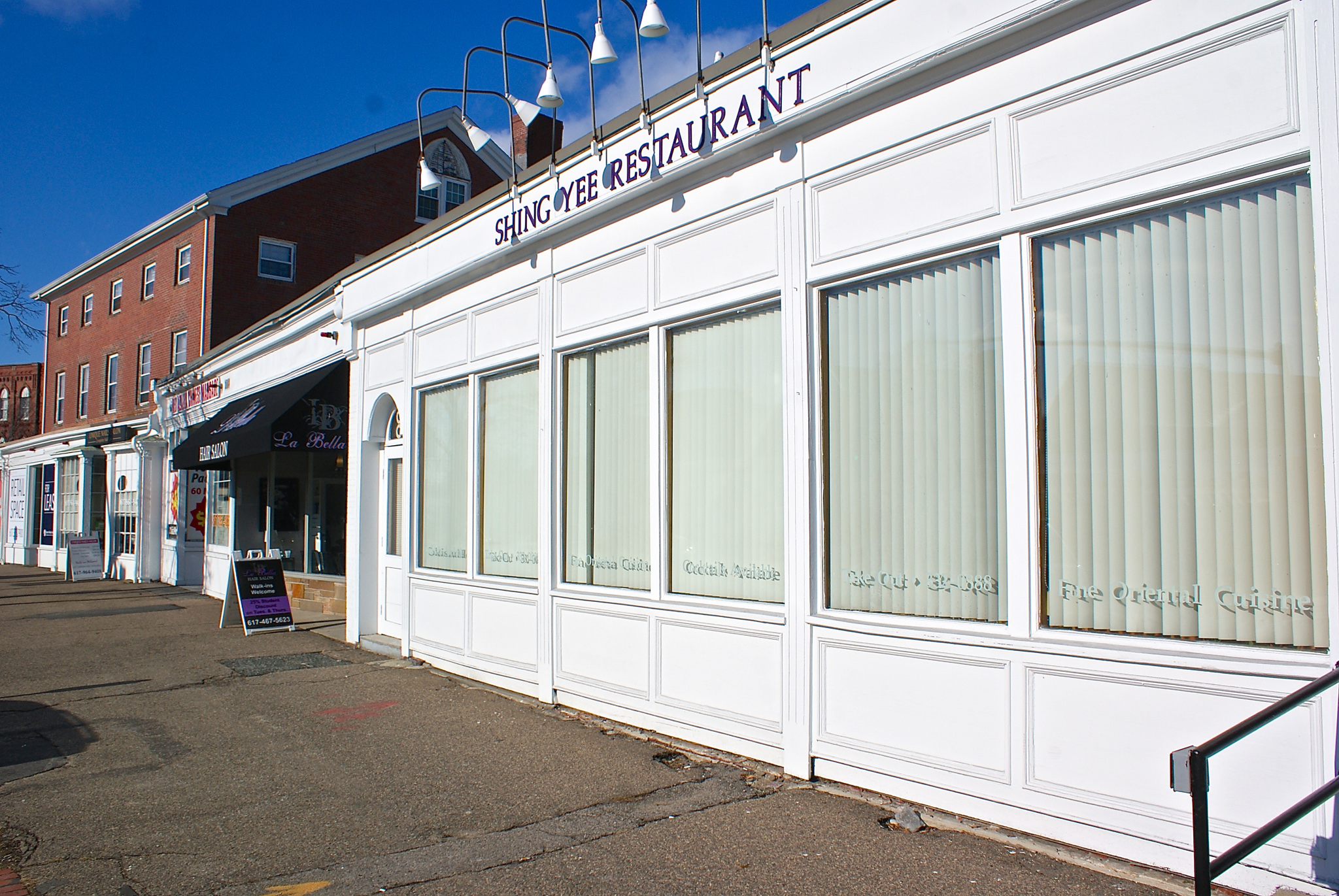
The building at 1255 Washington Street, which is currently home to Blue Salt, a restaurant featuring burgers, steaks and Eastern European-inspired dishes, appears to be of the same vintage.

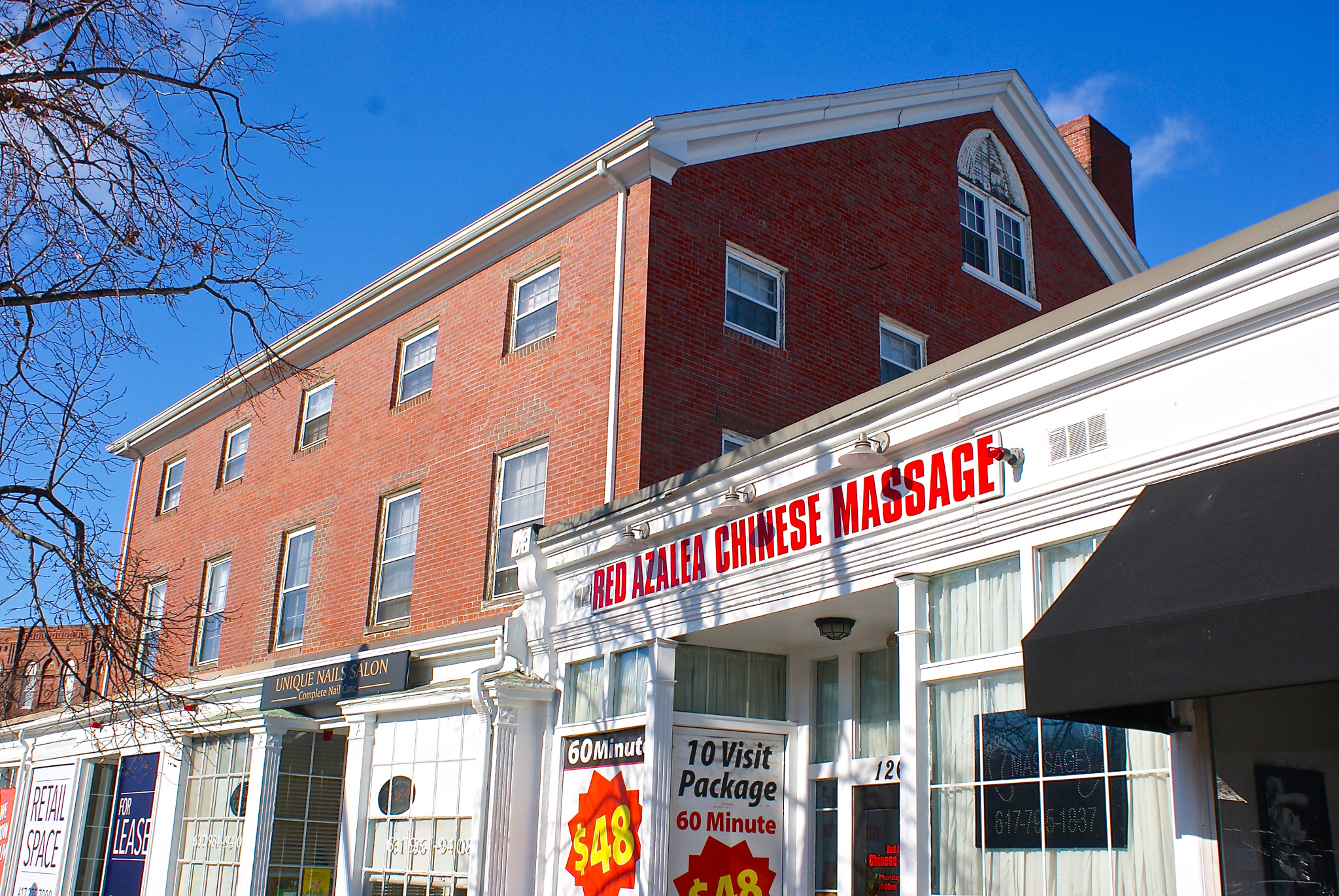
Go ahead, look closely. Yes, this is an old photo. I made this photo quite a few years ago, when the space was filled by Shing Yee. In the intervening years, a Mexican place called La Tate moved in and moved out, followed by Blue Salt. Building is still the same, though.

At the rear of this building is a space that most recently was home to a Spinbox fitness franchise.

The westernmost building in this block is also the one with the greatest history.

Currently home to Sweet Tomatoes Pizza, part of a small, local chain restaurant, this Federal Greek Revival-style building is known historically as the Railroad Hotel. Located at the intersection of Washington and Watertown streets, it was built in 1831, and is also known by the names Davis Hotel and West Newton Hotel, per MACRIS.

"This three-story brick hotel building, located at West Newton's most important intersection, is believed to be West Newton's oldest remaining commercial structure," MACRIS indicates. "Many of the hotel's original architectural features remain, although the ground level has been altered, its steep, symmetrical chimneys removed, and changes made to the fenestration pattern on two elevations."

"Seth Davis, local teacher, builder and centenarian, built a hotel at this location to take advantage of the stagecoach line from the train to points west," MACRIS says. "His was one of the first major commercial investments in West Newton as it was making its transition from a farming village to commercial center. By 1834 the train came through West Newton, which still brought business to the hotel. Since being converted from a hotel, this building has housed dry goods merchants, a shoemaker, a restaurant, café, TV repair, and other retail uses."

(Historic plaque on the side of the building. It's almost impossible to read without binoculars or a long camera lens.)

I'm not sure when the hotel went out of business, and other tenants moved in.

Just across the intersection from the pizza joint is the relatively new Bluebird Bar & Wood-Fired Grill, which is located in another 1920s-era building.

The facade isn't much to look at, but I've heard great things about this place, which succeeded Lumiere, an excellent French restaurant that was here for years. At some point many years ago, this space was home to a franchise of the Brigham's restaurant chain. The chain was an outgrowth of an ice cream business that started in Newton Highlands in 1914. You can still buy the ice cream in local grocery stores.

The Cherry Tree Pub, located just west of the police headquarters and district court, has been around for ages.

The place went out of business during the pandemic, but then raised up, Lazarus-like, to live again. I've never been there. It's situated between the Louis du Gal Salon and Zheng Garden. It's two doors down from the former location of Harris Cyclery, a West Newton Square stalwart that unfortunately went out of business in the early Covid days.

(Rear of building housing the Cherry Tree and the former bicycle store. The ghost sign is for F&B Associates, a print shop.)

Just across Elm Street, along Washington Street, is one of my favorite local joints: Blue Ribbon Barbecue, which has been around since 1995. The food is really good, and there's plenty of it in each order. I wish there were more BBQ places in the area.

Gotta dig the sign of this place, which also has outlets in Arlington and Dedham.

I'm sneaking in a non-restaurant here, because this building dates to 1860, per MACRIS.

It is currently home to Minuteman Press and realty firm Hillman Homes. I wish I had more information about this building, which is way older than I assumed over years of driving past it.

Next door is Shogun, a Japanese restaurant that's been in business for a few decades.

At the end of this restaurant row is the former home of The Local, a chain that feataures eateries in Waltham, Wayland and Wellesley.

(Ghost signs from The Local.)

This is the future home of a new outlet of Burke's Alewerks, a brewery and taproom based in Hanover, Mass., with another outlet in Arlington.

(Good to see signs up for the new place!)

As you can see on the sign below at the backside of the future Alewerks building, this space was once home to restaurants called Nelly's and Tee Gee's.

Around the corner from Blue Ribbon, Shogun and the future Burke's, on Elm Street, is Paddy's Public House.

This is one of my go-to places for takeout (and, occasionally, eat in). Its dark, mahogany bar gives it a touch of Ireland, and the staff is pleasant and the food is nothing fancy, but always good. Opened in 2002, this place was formerly the Troubadour Restaurant. The building dates to 1900, according to the Newton Assessor's Database, but it could be older. I'm guessing there were other restaurants and bars here going back to that time.

Next door to Paddy's is Corner Mini-Mart, which is located in a building that dates back to at least 1900.

There are a few other eateries in West Newton Square, including an outlet of Comella's, a local family-style Italian restaurant, and Flora's Wine Bar. So, as you can see, there's a lot going on in a pretty small area here. Here's hoping that all of these places can last a good long time.

Other than restaurants, the main draw to the square is the West Newton Cinema.

Opened 85 years ago, this cinema has had its up and downs, and its long-term future is uncertain. "The Newton Theatre was designed in 1937 by architects Krokyn & Browne of the Boston based architectural firm Krokyn, Browne & Rosenstein," according to this Cinema Treasures write-up. "This theatre combined elements of Art Deco and Art Moderne styles. The West Newton was part of the M & P Theatres circuit, which also owned the Metropolitan (Wang Center) in Boston."

In the late '60s, the theater hit hard times, and was cut up into three theaters. In 1990, it was divided yet again, into the current six theaters. The current owners, the Bramante family, acquired the theater in 1978. They managed to limp along through the pandemic, but in July, they announced in an email to their devoted following that they had "begun to explore opportunities to transition ownership and operation for the Cinema. As part of that process, we have reached agreement to sell the property where the theater is located...to Mark Development."

Yes, Mark Development is everywhere in West Newton and Newtonville these days (see part one of this West Newton series). I didn't grow up in Newton, so I don't have fond memories of seeing films at the West Newton Cinema when I was a kid. But I have been there numerous times over the last two decades, and seen some great films in both the large theater and the smallest one. I've also attended a photography club exhibit opening there. I haven't been in quite some time.

It's entirely possible that the last days of the theater are not far off. But it's not a foregone conclusion. Again, from the email, which was posted in its entirety on the Village14 blog: "We will continue to operate West Newton Cinema for the next 18 months to 2 years while identifying options for transitioning leadership and operation of the cinema to another entity. One idea under consideration is forming a non-profit that would have the resources to invest in the physical facilities, support community arts and education initiatives, and maintain a focus on independent films. Mark Development has agreed that the cinema can continue to lease space and operate at the current site while our family considers different models. At this time, Mark does not have development plans for the site, but has committed that if we identify a new entity that can sustainably operate the theater, it will remain in place."

Fingers crossed.

One place that Mark Development does have plans for, is the former Santander Bank.

Located at the corner of Washington and Highland streets, this place was built in 1915 as the West Newton Savings Bank. It was enlarged in 1935 and again in 1959, according to a MACRIS report on the West Newton Village Center Historic District. Mark Development plans to add a five-story addition to the rear of the existing building. The project will be comprised of 50 residential units and approximately 4,100 square feet of ground floor retail space, according to the developer's web site.

With already-approved projects and those in the pipeline, West Newton Square stands to undergo quite a transformation in the coming years. Mark Development also owns land or is affiliated with parties that do between Watertown and Washington streets, including the properties where the Brezniak funeral home stands, along with the abutting retail establishments. I can't recall where I read that, so I hope I'm correct in asserting that.

Brezniak Funeral Directors, located between Baby Koo and Blue Salt, is located in a building that dates to at least 1926, perhaps further back.

Known historically as the Cate Funeral Home, the Classic Revival building has stood the test of time quite well. The Brezniaks have a long history, the most recent times spent here. Morris Brezniak joined his father-in-law's business (The Levine Chapel in Brookline) in the early 1940s, according to the Brezniak web site. Subsequent generations have run the operation, forming a business called Brezniak-Rodman in 1992 and then moving on to today's current name, Brezniak Funeral Directors.

(I was excited to find this old sign for the Cate & Pratt Funeral Home behind the business, shaded by some trees.)

"The Cate Funeral Home established in 1861, originated as a local stable and casket maker. Joined by the E.W. Pratt Funeral Home of Piccadilly Square, The Cate & Pratt Funeral Home served Newton through 1990," according to the web site for another funeral home, Burke & Blackington, which I will talk about next.

I don't talk a lot about funeral homes here on the blog, and yet here I am about to talk about the second one in this post.

Located at 1479 Washington Street, the Burke & Blackington Funeral Home was established in 2009, the result of a merger that continues a tradition of providing services to the community for many decades. The original home, known as the William E. Healey House and dating to 1845, has been renovated and expanded, per MACRIS.

Back in the thick of the square is a small building that was born to serve one municipal purpose, but which currently serves a different one.

Located on Chestnut Street, the West Newton Memorial Library was the first of five branch libraries built in Newton from 1926 to 1939, per MACRIS. This Tudor Revival building is a little run-down these days. After the library closed, the building was used by a rehab center. Currently, it is an annex to the police headquarters located around the corner on Washington Street.

If we stretch our definition of the square, the eastern limit is a low-slung building on Washington Street that is currently home to the Ascend Cannabis Dispensary.

Prior to the pot shop, this was an outlet of the Beacon Hill Sports Club. The building dates to 1950, according to the Newton Assessor's Database, and was previouly the home of New England Telephone & Telegraph and Alberts Chrysler.

(I made the above photos after the fitness club closed and before the marijuana dispensary opened.)

Just west of Ascend is Trader Joe's, a place where I rarely shop, despite being fascinated by the building's history.

I was shocked to learn a few years ago that this boring (on the outside) yet pleasant little grocery store was once a trolley barn. "The Newton Street Railway Carbarn, built in 1890, consists of a long, two-story central block with single-story side wings. The wood-frame structure was originally shingled, and the side elevations still show this sheathing material," per MACRIS. "Although the building's overall form and side elevations remain intact, the street facade has been altered. A front gable, balustrades at the roofline in the wings, patterned shingling, and the high trolley entrances have been removed."

It's easy to forget that a century ago, street cars were a common mode of transportation through Newton and other towns and cities surrounding Boston. "The Newton Street Railway Company, chartered June 29, 1886, was the original core of the Middlesex & Boston Street Railway Company, which by the 1920s, from its Newtonville office, controlled a 120-mile network of lines in Middlesex County," MACRIS continues. "Soon after its incorporation, the company took over two lines through West Newton: River Street to Waltham (1868) and the Newton Corner-West Newton Route along Washington Street (1880). In 1889, the company changed its motive power from horsedrawn cars to electric power."

I'm not sure when the railway company went offline, or when the old car barn was converted to commercial use.

Across the appropriately named dead-end Armory Street is....

...the Newton Armory. Built in 1910 in the English Revival style that just about every such building I've seen in Greater Boston utilized, the Newton Armory was built as the home for Company C of the 5th Massachusetts Regiment of the Volunteer Militia. Eventually it became the home of the 972nd Military Police Company, per MACRIS.

The armory is slated for redevelopment as permanently affordable housing by the City of Newton, which owns the building. The project is a collaboration between Metro West Collaborative Development and Civico Development, and will include a large addition off the rear of the armory. This building is situated directly east of the future Dunstan East project I discussed at length in the first installment about West Newton.

Continuing west along Washington Street, we come to a nearly 100-year-old former service station.

According to MACRIS, this little place -- currently home to used car dealer KG Motors -- was built in 1930 as a station for the Atlantic Refining Company.

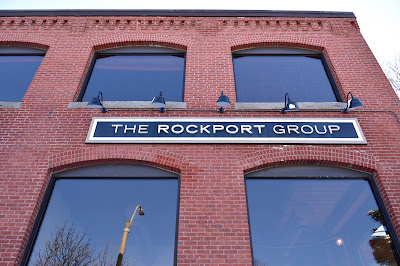
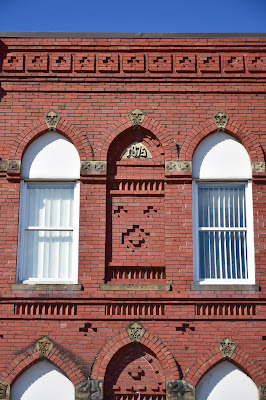
Across Washington Street is the current headquarters of shoe maker Rockport and video technology company VideoLink. The building dates to the early 20th century and was used for much different purposes from its inception.

"Georqe H.Martin, a Newton Centre resident, established the Martin Manufacturing Company in this location in 1903," MACRIS indicates. "Unusual for West Newton, a suburban residential area, the factory produced curtains and bed sheets.

"After 194O the building was occupied by a retail furnirure store, Mayflower Furniture," MACRIS continues. "During 1983 the site was extensively renovated for use as office space. Later concrete block additions have been faced with matching brickwork, and windows cut to match the earlier portion of the mill, including the granite sills."

The dominant building in West Newton Square is known as the Robinson Block, which is currently home to a CVS pharmacy, the West Newton Hearing Center, Rousson Family Dentistry and Starting Strength personal training.

Surprisingly, MACRIS has nothing about this great old building. I did find plenty of information, though, in a Newton Local Landmark Report for the building prepared in 2020 for the Newton Historical Commission.

From that document: "By 1881, the old buildings on the site appear to have been replaced by this brick building, owned and operated by Charles E. Billings, a druggist.... An 1884 Sanborn Map shows this building with six tenants operating businesses from the first story. Billings’ estate continued to own the property in 1895, and in 1907 Charles O. Billings, his son, was listed as owner. He...continued to own the property in 1917. Newton atlases continued to label the building as the Robinson Block for the duration of Billings’ ownership, through at least 1898.

"By 1929 the building was owned by Maurice J. Barron, a dry goods merchant and an Ă©migrĂ© from Russia who owned and operated the eponymous Barron’s Department Store....In 1906, at the age of 26, Barron become a US citizen and resided in Brookline. Under Barron’s ownership, the two rear ells on the building were constructed in 1939 and 1949 respectively. By the 1950s the Barron family ran the business, with Maurice becoming treasurer and Archibald Barron serving as president of the corporation. The Barron family managed this property until well into the 1960s."

West-northwest of the CVS building, behind the police headquarters and Captain John Ryan Memorial Park, is the Dr. Samuel Warren House, the oldest in West Newton.

"The Dr. Samuel Warren House, a Georgian-style residence built ca. 1716, originally stood on Washington Street in the center of West Newton. It was moved to its present location on Cherry Street...in 1868," according to a National Register of Historic Places nomination form I found through MACRIS. "The building was somewhat modified in 1868 , when it was converted to a multifamily residence, and again ca. 1960, when its 18th century appearance was restored and its interior was slightly altered for business purposes."

The house is not only old, but holds importance across decades of Newton's history. "The owners of this house over time represent a veritable Who's Who of prominent Newton citizenry," per MACRIS. "This house appears on or near Washington Street in West Newton on every historic map in Newton....In 1716, William Williams acquired 60 acres of land from his father Isaac, which at that time had no buildings. When William sold a portion of the land, with 'mansion house' and barn to Richard Coolidge in 1732, this was the first reference made to buildings on this parcel.

"The house was believed to have become a fully symmetrical Georgian house in 1751, when a locally known physician named John Allen inherited the property from his father. Another active local citizen and landowner was John Pigeon, who purchased and occupied this house from 1769 to 1777. Among his other local activities, Pigeon served as Newton's delegate to the Provincial Congress in Concord, Mass. After a few more owners, the house was finally purchased by the eponymous physician Samuel Warren, who lived with his family and worked from this house for the next thirty-two years.

"In 1868, his heirs sold the house to the City of Newton, who subsequently sold it to the Lucas family. With their purchase, the Lucases moved the house around the corner to its current location on Cherry Street, and constructed a north extension on the building that gives the building its unusually elongated appearance. By the late 1800s and early 1900s, the Allen family, early pioneers of integrated public education in Massachusetts and owners of the Allen House and school located at 35 Webster Street, purchased the house. There is speculation that Allen may have housed teachers or students at this location."

I'll get to the Allen House and school in a moment. This property is also known as the Zenith Products Company building, after a firm that owned the building and used it for office space.

Below is the Nathaniel Topliff Allen House, a Greek Revival home built in 1841 that has a great history and a fantastic present.

"The house is of the end-gabled type and features a monumental Ionic portico on the long street elevation," according to MACRIS. "Attached to the house by a series of wings and ells is a front-gabled barn with a Greek Revival period louvered gable window. This section of the complex served as part of the Allen School at one time."

After working with renowned educator Horace Mann, Nathaniel Allen founded the West Newton English and Classical School, a very progressive institution that eventually became known as the Allen School. Educators provided "equal educational opportunities for girls as well as boys in racially mixed classes," according to Historic Newton. "The inclusion of gymnastics as part of the educational offering along with a pure kindergarten, were also educational firsts."

"In addition to his position as a nationally prominent educator, Nathaniel Allen was involved in cultural and social welfare activities in Newton," MACRIS continues. "An ardent supporter of the abolition and temperence movements, Allen was also associated with the Pomroy House for Orphan Girls in Newton Corner, the Perkins School for the Blind, the Newton Musical Association and the West Newton Athenaeum."

In 2012, as this wonderful house was slated to be divided into condos, the Newton Cultural Alliance stepped in and bought it. Using funds secured from the Newton Community Preservation Program, Massachusetts Historical Rehabilitation Tax Credits, the Massachusetts Cultural Facilities Fund, and private contributions, the NCA renovated the house. Now known as the Nathaniel Allen Center for Arts & Culture, the property is available to rent for recitals, performances and other events.

Let's talk briefly about the only church in the square.

The First Unitarian Universalist Society in Newton was founded in 1848, and has been meeting in its current building, built in the English Gothic Revival style, at the corner of Washington and Highland streets since 1905. An addition was built in 1954. Both Horace Mann and Nathaniel Allen were members of the congregation.

If you had a strong arm, like, a really strong arm, you could throw a collection plate from the UU church to 437 Cherry Street, below.

Home to the Greater Boston Chinese Cultural Association, the building dates to 1900, or perhaps earlier. On a parallel street to this building, at 115-119 Elm Street, is a Romanesque Revival building dating to 1890.

This "is the best remaining late 19th century business block in West Newton," according to MACRIS. It is home to Mango Thai Cuisine and MT Nails Salon.

I'm going to wrap up thisi post with some true backside sights, all located on Border Street, what passes for a gritty industrial area, just around the corner from Paddy's and Mango Thai Cuisine.

To the right is the back end of a one-story extention off the Corner Mini-Mart building previuosly mentioned. I'm not sure what's in there. Perhaps storage for the store or other area businesses? To the left is Aqualine Pur Water Services. I haven't been able to find out anything about the building.

Across Border Street is a former (I think) sheet metal shop. A Google search for this address brings up Tim Terrio Heating and Air Conditioning, and says it is temporarily closed. The building dates to 1910, per the assessor's database.

Last, but certainly not least (how often do I say that here?) is 25 Border Street.

Built in 1930, this light industrial building was most recently a body shop, or so it appears. But as you can tell by the sign, it was also once home to Yellow Cab. That taxi business started in the 1960s and was in business until 2017, according to this Patch article. This seems like the kind of site that Mark Development would be interested in.

OK, I hope you stuck with this whole post; I know it's long. Be sure to check back for Section 3, in which I will discuss social clubs, a music school, more churches, a synagogue, a private school, a cool fountain and much more.

Below are links to all of the previous posts in this series.

"I Seek Newton, Part XII: West Newton (Section 1: The Barn Redevelopment)"

"I Seek Newton, Part XI: Newton Corner (Section 3)"

"I Seek Newton, Part XI: Newton Corner (Section 2)"

"I Seek Newton, Part XI: Newton Corner (Section 1)"

April 10, 2021, "I Seek Newton, Part X: Newton Centre (Section 3)"

April 3, 2021, "I Seek Newton, Part X: Newton Centre (Section 2)"

March 27, 2021, "I Seek Newton, Part X: Newton Centre (Section 1)"

November 15, 2020, "I Seek Newton, Part IX: Nonantum (Section 3)"

October 29, 2020, "I Seek Newton, Part IX: Nonantum (Section 2)"

September 24, 2020, "I Seek Newton, Part IX: Nonantum (Section 1)"

March 14, 2018, "I Seek Newton, Part VIII: Upper Falls (Section 3)"

March 8, 2018, "I Seek Newton, Part VIII: Upper Falls (Section 2)"

March 1, 2018, "I Seek Newton, Part VIII: Upper Falls (Section 1)"

March 7, 2017, "I Seek Newton, Part VII: Thompsonville"

December 5, 2016, "I Seek Newton, Part VI: Chestnut Hill"

September 26, 2016, "I Seek Newton, Part V: Oak Hill"

June 3, 2016, "I Seek Newton, Part IV: Waban"

March 23, 2016, "I Seek Newton, Part III: Newton Highlands"

September 20, 2015, "I Seek Newton, Part II: Auburndale"

May 21, 2015, "I Seek Newton, Part I: Lower Falls"

New Balance Draws a Red Line with Diner

From Dave Brigham: I can't be expected to know everything about the backside of America, nor of Massachusetts or even of Boston. But I...